
Abigail Gunderson, Senior Wealth Advisor, shares practical strategies for women’s retirement planning, including maxing out a 401(k) early and using spousal IRA accounts during caregiving years in Financial Planning.
Abigail Gunderson, Senior Wealth Advisor, shares practical strategies for women’s retirement planning, including maxing out a 401(k) early and using spousal IRA accounts during caregiving years in Financial Planning.

Keith Fenstad, Director of Wealth Planning and Chief Compliance Officer, discusses how the OBBBA’s permanent $15 million estate tax exemption removed the “use it or lose it” urgency around gifting strategies in InvestmentNews.

Michael Pumphrey, Wealth Advisor, explains why paying down high-interest credit card and other debt should take priority over maxing out 401(k) contributions, and outlines how to balance retirement savings with debt payoff in MarketWatch.

John Merrill, Founder, President and CIO, and Brian Merrill, Corporate Development Officer, discuss Tanglewood’s long-term succession planning, commitment to independent ownership, and multi-generational approach to client service and firm growth in Wealth Management.

Abigail Gunderson, Senior Wealth Advisor, discusses coordinating retirement planning between spouses in Kiplinger.

In January 2026, Fernando Mendoza, the Indiana Hoosiers’ Heisman–winning quarterback, led an historic run to a National Championship. While the victory secured his place in the record books, it also fundamentally shifted his balance sheet. Overnight, his NIL (Name, Image, and Likeness) valuation spiked to an estimated $2.6 million. This can already be seen in the new partnerships he’s secured with Taco Bell, LinkedIn, and Adidas, among others.
To the casual observer, this is a sports story. To a Wealth Manager, this is a Liquidity Event that results in Sudden Wealth.
Whether it is a $2.6 million endorsement deal, a $3 million inheritance, the sale of a business or retirement, the challenge remains the same: A substantial increase in one’s investable wealth is not spendable income like a salary – it is finite investable income producing capital that will benefit from a comprehensive Wealth Planning strategy.
The most common mistake after receiving a windfall is viewing the lump sum as a “spending fund” rather than an “income engine.” To determine if a windfall can support a lifestyle, wealth recipients and their advisor can use either the Traditional Withdrawal Rate (TWR) or the Perpetual Withdrawal Rate (PWR).
The Traditional Withdrawal Rate sets the highest distribution of dollars that one can withdraw in the first year of retirement (or other source of new wealth) which can be adjusted for future inflation through a preset time period (30 years, 40 years, etc.) with high confidence (greater than 90% achievable based on history).
This is often referred to as the “4% Rule” as the initial dollar amount was thought to be 4% of the total wealth supplying the income withdrawals. However, Tanglewood’s research shows that the initial percentages vary with both the time period for which the income is intended and the strategic asset allocation (Investment Policy) that one chooses to govern the investments.
Many of those experiencing sudden wealth gravitate to the TWR for its predictability of inflation–adjusted income.
This method of withdrawing income from a portfolio is more ideal for multi–generational wealth. The goal is not to maximize a stable inflation adjusted income for a set time period but to ensure that the wealth itself is maintained indefinitely with appropriate withdrawals.
This method sets an annual percentage that can be distributed from the portfolio. The percentage is determined by the strategic asset allocation chosen. Because the portfolio value changes annually with market conditions, the percentage withdrawal in any particular year is set by the past year’s investment performance of that asset allocation. The annual withdrawals from this method are more variable but also more sustainable over long, indefinite time periods.
In Tanglewood’s most recent book, Perpetual Wealth: Strategies for Financial Freedom, the annual percentage withdrawal rates for four of our Investment Policies based on the beginning portfolio value are:
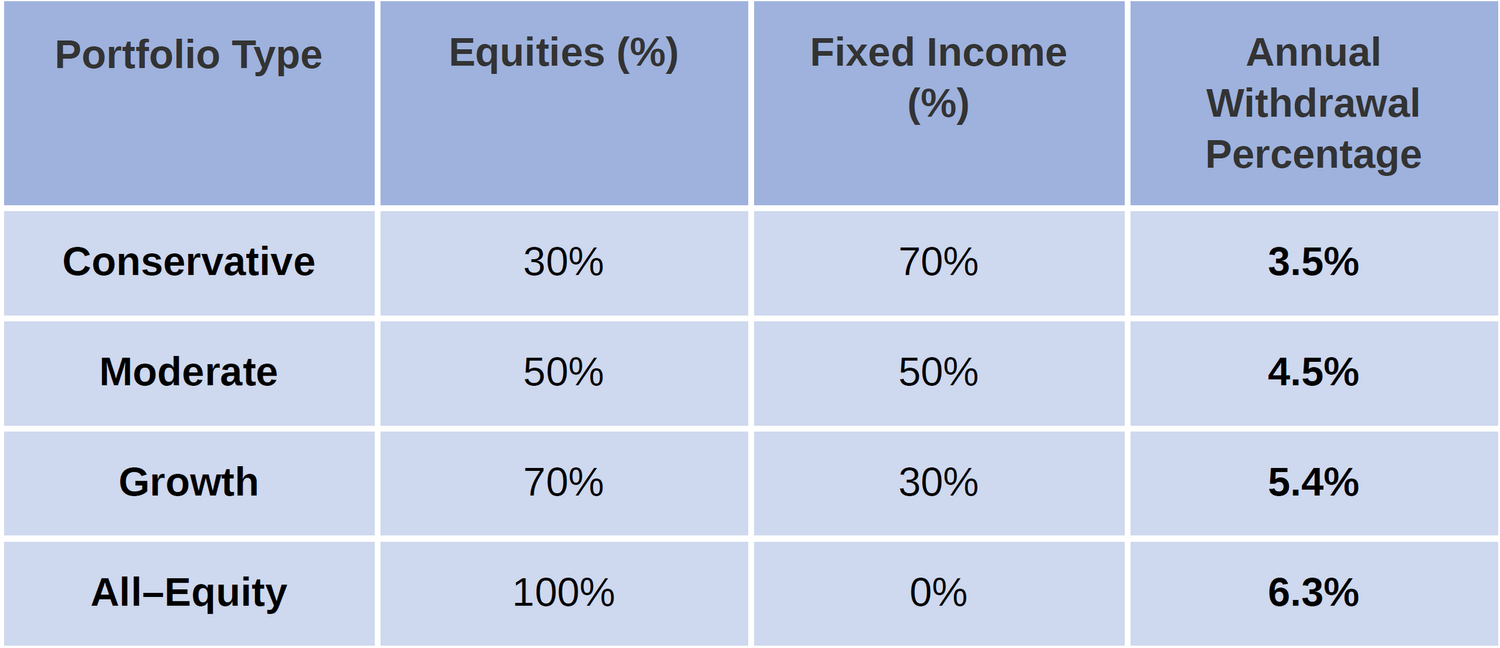
A windfall often provides a false sense of security. If no plans are made for how much can be safely withdrawn from the total portfolio – based on either TWR or PWR – the overwhelming tendency is to spend too much money and deplete the portfolio (and its earning capacity) over time.
A 529 plan is a popular savings vehicle that is used to save for future college expenses. It offers the benefit of tax-deferred growth and tax-free withdrawals for qualified education expenses. Typically, a parent owns the 529 plan for the benefit of their children. Less common are grandparent-owned 529 plans for the benefit of their grandchildren.
Increasingly, though, we are having conversations with grandparent-clients who are interested in setting funds aside for their grandchildren’s college. Changes over the past couple years have reduced the negative effects grandparent-owned 529 plans on financial aid, and scholarships.
Federal financial aid includes grants, work-study, and loans. The Free Application for Federal Student Aid (FAFSA) form is completed annually and used by most public colleges to determine how much federal financial aid a student is eligible to receive. Many private colleges also require the College Board’s College Scholarship Service Profile (CSS Profile) for their own financial aid.
Previously, the grandparent-owned 529 plan assets were not reportable on FAFSA, but when distributions were made to the student to pay for college expenses, the distribution was counted as the child’s income, which consequently had the greatest negative impact on financial aid.
Under current federal rules, neither the account balance nor distributions from a grandparent-owned 529 plan are reportable on FAFSA. This is a big benefit for students who attend public colleges with the intention of using some form of financial assistance.
If you have a grandchild who attends a private college that requires the CSS Profile, the grandparent-owned 529 plan—similar to parent-owned 529 plans—will be treated as an available resource, resulting in a reduction of the school’s own financial aid offer.
Grandparents keep full legal ownership and control of the grandparent-owned 529 plan, allowing them to decide when and how much to contribute, direct investments, choose withdrawal timing, and even change the beneficiary.
Contributions to a 529 plan can reduce the grandparent’s taxable estate since 529 plans are excluded from estate tax. Also, depending on the state a grandparent lives in, they may be eligible for state income tax benefits (e.g., tax credit or deduction) for contributions they make to their grandparent-owned 529 plan.
As owner of the 529 plan, the grandparent can take back the money by distributing it to themselves. However, the earnings portion on distributions—that are not used for qualified education expenses— is subject to ordinary income taxes plus a 10% penalty.
Saving for your grandchildren’s education can potentially give their parents the opportunity to focus more on saving for their own retirement and other financial goals. However, a natural concern is that parents could consciously or subconsciously dial back their own saving efforts.
Grandparent-owned 529 plans are one of the more tax-efficient and legacy oriented tools available. The key is treating them as a coordinated piece of a broader family wealth strategy rather than a standalone solution. That starts with conversations between grandparents and parents, setting clear expectations, transparency, and integration with the parents’ own educations savings efforts.
As always, reach out to your Tanglewood Wealth Advisor if you would like to discuss a grandparent-owned 529 plan to help save for your grandchildren’s education.
One of the fastest-growing risks today is fraud made more convincing by artificial intelligence, or AI.
Obviously, scams are nothing new. What IS new is how real they can feel. Technology now allows scammers to sound polished, personal, and even familiar. Messages that look like they came from a bank, phone calls that sound like a family member, or even missed-delivery text messages seem harmless at first glance.
The good news is you don’t need to deeply understand the technology to protect yourself.
Almost every scam we see has one thing in common…pressure. The message might say your account or PC is at risk, a loved one is in trouble, or something needs to be handled immediately.
If you ever feel pushed to act quickly, that’s your sign to stop. Take a moment to slow down and contact a trusted family member or reach out to us so we can help you think it through.
One of the more unsettling changes we are seeing is just how convincing messages can be. AI can now mimic writing styles and even voices, which means a call may sound exactly like a relative who seems to be in trouble. In those instances, hang up and call them back using the number already saved in your phone.
It can also help to put a few simple safeguards in place ahead of time. With how quickly technology has evolved over the last decade, there are now many ways to stay connected with friends and family. Location-tracking features like Apple’s Find My or apps such as Life360 allow you to see real-time locations and check in for added peace of mind.
Another helpful strategy is to create a simple family “safety word,” something only your family knows to use if a situation ever feels urgent or unusual. Most importantly, have these conversations ahead of time. As AI continues to develop, staying connected and prepared as a family makes a real difference.
Strong passwords are one of the easiest ways to protect your accounts, but we know they can be a pain to remember. That’s where password managers can help. A password manager securely stores your passwords and can create strong, unique ones for each account, so you don’t have to remember them all or reuse the same password everywhere.
You can use built-in options from Apple or Google, or third-party apps like Dashlane or 1Password. Each has its pros and cons, but the most important thing is choosing one and consistently using it to create unique passwords for every account.
When used alongside two-factor authentication, password managers add an extra layer of protection and reduce the stress of keeping track of logins.
Another login method you may start hearing more about is something called passkeys. Passkeys are designed to replace traditional passwords altogether. Instead of creating a password that a website has to store and protect, your device (like your phone or computer) creates a unique, highly secure digital key that never leaves your device. When you log in, you simply confirm with Face ID, Touch ID, or your device PIN, and the key securely verifies it’s really you. Because there’s no password to type, steal, reuse or store, passkeys are more resistant to phishing scams and data breaches. They can feel unfamiliar at first and aren’t available on every website yet, but when offered, they offer a greater level of login protection and security.
If you ever receive a message or call that raises questions, please reach out. Protecting your financial security means protecting you, and we take that responsibility seriously.

It is a great feeling to own an asset when its price surges. Gold may at least partially be an exception. Most everyone knows that gold serves as a disaster hedge…or a severe inflation hedge…so does gold’s explosive gains signal something we should be concerned about?
While anything is possible, gold’s rise today is troubling primarily in the context of geopolitical rivalries.
America has been the dominant power in the post-cold war period. Much of that power is economic in that we are the largest economy and hold the primary reserve currency, the Dollar. This gives us enormous leverage in international trade as almost 80% of all cross-border transactions are priced in Dollars (even when the U.S. is not on either side of the trade.)
International trade in Dollars is conducted via the Society for Worldwide Interbank Financial Telecommunication (SWIFT) system. The willingness of America to provide liquidity to this system is of immeasurable importance to the world. Cutting off countries from SWIFT – as the West did with Russia after it invaded Ukraine – is an enormous handicap to their ability to trade.
China has long thought that this system gave the U.S. too much power (even to sanction China itself in a trade battle.) Their financial system lacks the depth and openness required, and the yuan remains too tightly controlled by the state to serve as a significant reserve currency. Yet they want another option to conduct trade rather than relying on the SWIFT system.
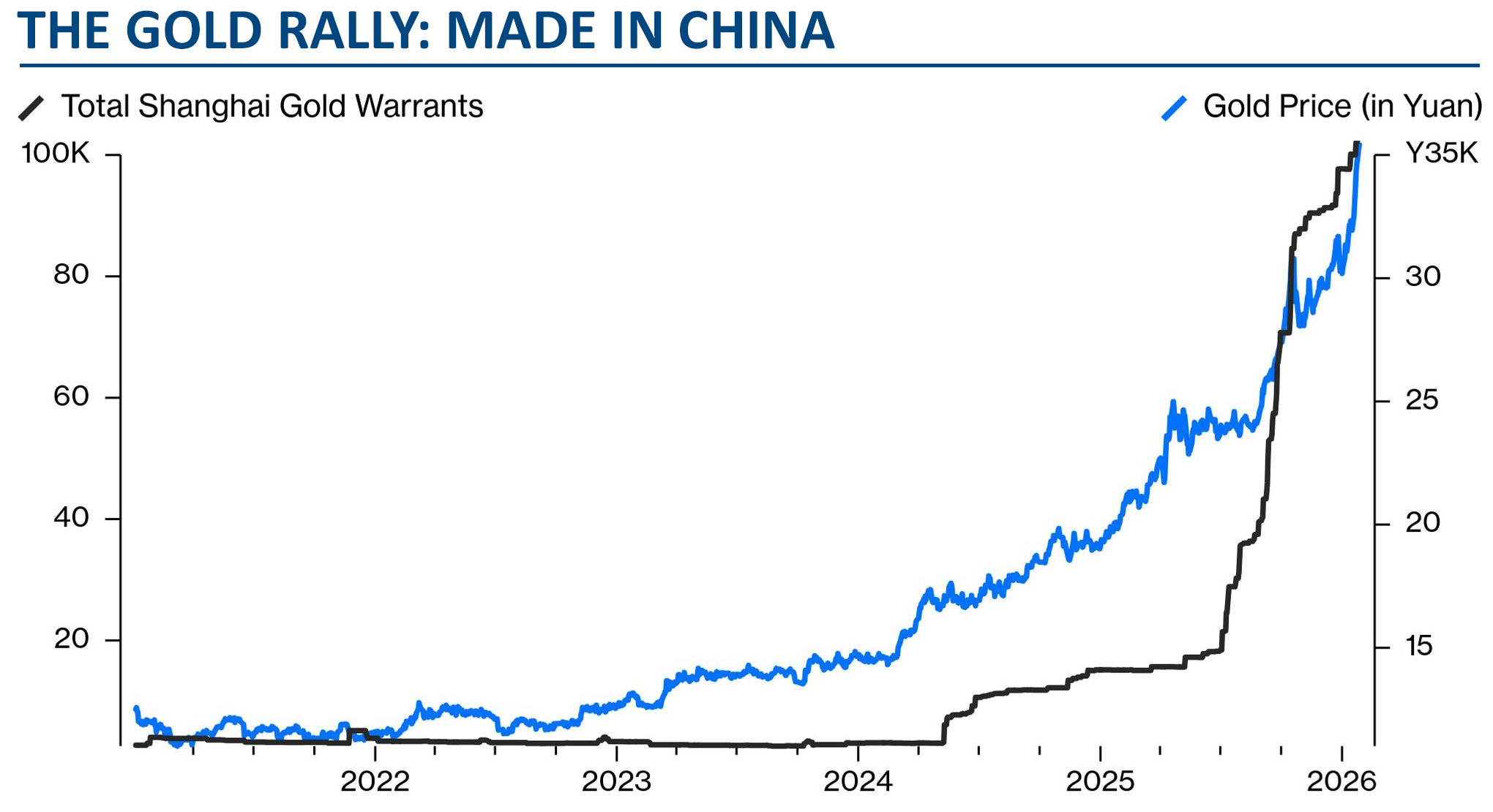
Enter gold, already the second biggest reserve “currency” behind the Dollar. In the last two years, China has become the world’s marginal buyer of gold according to Bloomberg. David Kotok of Cumberland Advisors points out that the Chinese have set up an alternate to the SWIFT system known as CIPS. CIPS issues tradeable warrants backed up by China’s growing hoard of gold.
Use of the CIPS system is growing fast and is now used in 30 countries. Its only limitation is the amount of gold in its vaults. That is why China keeps buying. The big price gains also increases their CIPS capacity. In other words, they are not price sensitive. As shown on the chart below, both the price of gold in Yuan and the number of warrants issued have gone ballistic.
This allows China to influence and control more international trade which provides more security for them. It also supports Dollar weakening which has been occurring for over a year. U.S. protectionism (tariffs) accelerates the process.
It is a great feeling to own an asset when its price surges. Gold may at least partially be an exception. Most everyone knows that gold serves as a disaster hedge…or a severe inflation hedge…so does gold’s explosive gains signal something we should be concerned about?
While anything is possible, gold’s rise today is troubling primarily in the context of geopolitical rivalries.
America has been the dominant power in the post-cold war period. Much of that power is economic in that we are the largest economy and hold the primary reserve currency, the Dollar. This gives us enormous leverage in international trade as almost 80% of all cross-border transactions are priced in Dollars (even when the U.S. is not on either side of the trade.)
International trade in Dollars is conducted via the Society for Worldwide Interbank Financial Telecommunication (SWIFT) system. The willingness of America to provide liquidity to this system is of immeasurable importance to the world. Cutting off countries from SWIFT – as the West did with Russia after it invaded Ukraine – is an enormous handicap to their ability to trade.
China has long thought that this system gave the U.S. too much power (even to sanction China itself in a trade battle.) Their financial system lacks the depth and openness required, and the yuan remains too tightly controlled by the state to serve as a significant reserve currency. Yet they want another option to conduct trade rather than relying on the SWIFT system.
Enter gold, already the second biggest reserve “currency” behind the Dollar. In the last two years, China has become the world’s marginal buyer of gold according to Bloomberg. David Kotok of Cumberland Advisors points out that the Chinese have set up an alternate to the SWIFT system known as CIPS. CIPS issues tradeable warrants backed up by China’s growing hoard of gold.
Use of the CIPS system is growing fast and is now used in 30 countries. Its only limitation is the amount of gold in its vaults. That is why China keeps buying. The big price gains also increases their CIPS capacity. In other words, they are not price sensitive. As shown on the chart below, both the price of gold in Yuan and the number of warrants issued have gone ballistic.
This allows China to influence and control more international trade which provides more security for them. It also supports Dollar weakening which has been occurring for over a year. U.S. protectionism (tariffs) accelerates the process.
Gold is not the only asset impacted by this rivalry of great powers and the systems that support them. The recent trade negotiations with China showed that they also have leverage over the U.S. and the rest of the world with rare earth mining and refining. This has led to an all-out campaign by America and others to increase our supply and refining capabilities.
This sudden change from efficient, just-in-time supply chains toward self-sufficiency and security has also impacted the price of semi-precious metals like silver, platinum, and palladium where year-on-year price gains have greatly exceeded that of gold.
Base or industrial metals such as copper, nickel, and aluminum have also experienced huge price gains over this period. These are fundamentally important materials for domestic manufacturing — in peacetime but more importantly in any war or threat of war.
In summary, the massive gain in the price of gold appears to be part of a larger story of a new global order where each side believes it must provide self-sufficiency for its own security. China led the world down this path with its 2015 plan that called for Chinese dominance and/or self-sufficiency by 2025 in the 10 major areas it believes critical. Much of this has already been achieved. This accompanied a massive military buildup.
Gold is a major part of China’s plan. Higher prices for the reserve currency metal are a plus, not a minus, as it builds its reserves faster and with less capital actually spent. That does not mean they will not from time to time pull back their buying, but the price will likely remain on an upward path so long as this plan continues in place. Ed Yardeni last year’s appreciation dinner speaker, has forecasted (since 2023) that gold will reach $10,000/oz by the end of 2029.
Source: Cumberland Advisors, Bloomberg
Gold is not the only asset impacted by this rivalry of great powers and the systems that support them. The recent trade negotiations with China showed that they also have leverage over the U.S. and the rest of the world with rare earth mining and refining. This has led to an all-out campaign by America and others to increase our supply and refining capabilities.
This sudden change from efficient, just-in-time supply chains toward self-sufficiency and security has also impacted the price of semi-precious metals like silver, platinum, and palladium where year-on-year price gains have greatly exceeded that of gold.
Base or industrial metals such as copper, nickel, and aluminum have also experienced huge price gains over this period. These are fundamentally important materials for domestic manufacturing — in peacetime but more importantly in any war or threat of war.
In summary, the massive gain in the price of gold appears to be part of a larger story of a new global order where each side believes it must provide self-sufficiency for its own security. China led the world down this path with its 2015 plan that called for Chinese dominance and/or self-sufficiency by 2025 in the 10 major areas it believes critical. Much of this has already been achieved. This accompanied a massive military buildup.
Gold is a major part of China’s plan. Higher prices for the reserve currency metal are a plus, not a minus, as it builds its reserves faster and with less capital actually spent. That does not mean they will not from time to time pull back their buying, but the price will likely remain on an upward path so long as this plan continues in place. Ed Yardeni last year’s appreciation dinner speaker, has forecasted (since 2023) that gold will reach $10,000/oz by the end of 2029.
Is there anyone left in the country who still believes that we can continue the social benefit promises currently in place without change? Today, over 60% of all federal tax collections go to the major social programs including Social Security, Medicare, and Medicaid. Based on current projections, that percentage will keep rising until eventually exceeding 100%.
Those like myself that have preferred limited government and staying close to the historic percentage of government taxes have to deal with this reality (in addition to the significant increase needed in defense spending).
Either benefits must be reduced, or taxes must go up, or some combination of the two to avoid a financially destabilizing debt crisis and severe cuts to benefit programs. Either of which could easily lead to severe social unrest, even worse than that experienced in France today over these issues.
The Republican party refuses to raise taxes while the Democratic party refuses to reduce benefits. And so, despite a building crisis, we have a stalemate. While a crisis is unlikely this year, at some point ahead it will happen without major changes. A bipartisan compromise is the better course. Such a compromise was reached once before with the Greenspan Commission in 1983.
What might such a compromise look like? Here are some of the realities that would have to be addressed.
The over age 65 segment of our population was the poorest demographic group in 1960 yet is now the richest.
Those retired are growing rapidly compared to our workforce growth. This will continue for years ahead due to the advances in longevity and our below replacement birth rate.
The spread between the top 10% of wage earners and the other 90% is now the highest in history while the highest income tax rate is lower than its post WWII average.
Social Security’s annual benefit increases have risen far more than inflation over time and continue to do so.
Asset owners (homes, equities, others) have done far better than non-asset owners yet have more favorable tax treatment.
Based on these realities, the following would be among the realistic changes called for in a grand bargain.
Means-test Social Security (SS) Benefits. Reduce benefits paid to high-income recipients. (Eliminate the fiction that SS is a pension.)
Change the inflation calculation. Currently, the annual increase in Social Security is based on the average increase in prices for a certain subset (30%) of workers. Replacing it with the BLS’s “chained CPI” reflects the substitution effect of consumers switching to lower priced products when prices rise. This better reflects the inflation experienced by retirees.
Move the age for Medicare to 67 (at some point ahead). Medicare should recognize the same reality of longevity as SS. Pass legislation allowing private insurance to provide options to this age.
Reduce favorable tax breaks available mainly to the wealthy. The tax code is full of special tax incentives to the members of our society that need it least.
Eliminate carried interest rules that allow conversion of earned income to more favorable capital gains.
Return the top personal income tax bracket to 39.6% (from the current 37%). Our economy has shown it can perform well with taxes at that level.
Cap the step up in basis at death at no more than the estate tax exemption. (Eliminates the free ride on billions of capital gains avoidance.)
Cap charitable contributions to say $10m in any one year and $100m at death. The mega rich fund hundreds of billions of dollars into foundations for their interests whereas taxes are needed for the public interest, particularly to fund our obligations for social benefits, defense, and interest on the debt.
The American public will rebel against any changes to their benefits unless they are considered modest and fair compared with the changes to the wealthy.
The wealthy have done much better than the rest of the public, which accelerated after Covid. Although they already pay a disproportionately large share of taxes, their share of consumption continues to grow. This implies that their share of disposable income continues to outpace the non-wealthy even with today’s tax load.
We are moving steadily toward being an oligarchy where the “1% (or 0.1%)” controls the means of production, the distribution of incomes, and most capital investment. This is unhealthy for civil society and gives rise to the acceptance of socialist ideologies in our universities, our institutions (including foundations), and political candidates like Mamdani in NYC.
At one point, this was just the political fringe that deemed socialism an acceptable alternative. Yet this acceptance is growing rapidly among our young people—not because it has earned this acceptance anywhere it has been tried, but because of loss of faith in capitalism to share its benefits across the entire population.
In order for such a grand bargain to have staying power beyond one presidential administration, it would have to have large bipartisan majorities in both houses of congress. To achieve this, the wealthy from both parties would have to speak out in favor of it (both publicly and privately). Why would they support it? Because they are the biggest long-term losers if there is a civil or fiscal breakdown.
Of course, some provisions would need to be phased in over a period of years to allow both individuals and the economy to adjust without major disruption. In addition, the new revenues would need to be directly or indirectly applied to reduce deficit spending through budget and social benefit controls agreed to by a large bipartisan majority.
There is no doubt that most observers will contend that a grand bargain could never happen. Certainly, others have tried to craft a grand bargain and failed. But time is running out on our having control over the meaningful changes needed before unplanned and unwanted changes are forced upon us by a social and fiscal crisis.